
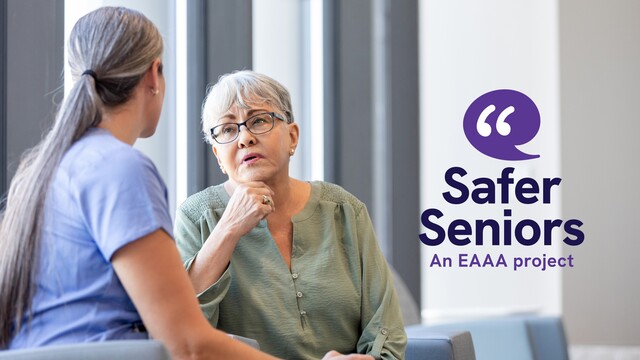
SaferSeniors is a professional development program designed to strengthen the capacity of workers who support older people.
It builds understanding of elder abuse – its causes, signs, and impacts – and develops practical skills to recognise, respond to, and prevent mistreatment.
Developed by Elder Abuse Action Australia (EAAA), this short course combines evidence-based learning with real-world case examples.
Learners explore trauma-informed and culturally sensitive approaches that promote safety, autonomy, and dignity for older people
Each self-paced module includes interactive content, reflection activities and practical examples to apply in everyday work.
Elder Abuse Australia Learning and Development Lead Jeremy Smith said SaferSeniors was developed in response to a clear and persistent gap in knowledge about elder abuse, including among people who regularly work with older Australians in their homes.
“Data from the aged care census, along with frontline experience, shows that an understanding of what elder abuse looks like and how to respond remains low,” he said.
“This is particularly concerning given estimates that up to 650,000 older people in Australia experience some form of abuse each year.
“This course is grounded in the belief that raising awareness and equipping people with practical, real-world strategies can make a meaningful difference.
“This could be by supporting an older person who is already experiencing abuse or intervening early to prevent harm before it escalates.”
Courses like this show there is an ongoing and significant need for protection of seniors, but Jeremy said it was important to think beyond protection alone.
“While the prevalence figures clearly show the scale of the issue, elder abuse is also deeply linked to ageism and the erosion of autonomy.
“Too often, decisions are made for older people rather than with them, based on assumptions about capacity or vulnerability.
“Research, including findings from What’s age got to do with it? shows that ageist attitudes can increase the risk of abuse by normalising control, exclusion and the dismissal of older people’s wishes.
“SaferSeniors focuses on protecting safety while also upholding an older person’s autonomy, dignity and right to make decisions.”
Cultural understanding was essential to the design of SaferSeniors because elder abuse does not occur in a vacuum.
People’s experiences are shaped by culture, identity, history and community context.
“To ensure the program reflected this reality, we worked closely with a Diversity Impact Panel, bringing in the voices of Aboriginal and Torres Strait Islander people, people living with dementia, people from multicultural and multi-ethnic communities, and members of the LGBTIQA+ community.
“This approach is particularly important as Australia, through the Draft National Plan to End the Abuse and Mistreatment of Older People, is recognising that the denial or erosion of a person’s culture can itself constitute a form of abuse.
“SaferSeniors aims to increase awareness of elder abuse and ageism and to build confidence in knowing how and when to respond.
“For workers and professionals who support older people in their home, this means being better equipped to recognise abuse, respond appropriately and support older people in ways that are informed, respectful and effective.
“Participants will gain a clearer understanding of appropriate ways to assist older people while respecting their rights and choices.
“The training also supports the development of stronger healing and recovery approaches for people who have experienced abuse, because elder abuse is everyone’s business and it occurs across all communities and settings.”
SaferSeniors is an education initiative of Elder Abuse Action Australia and is funded by the Australian Government Department of Social Services.