

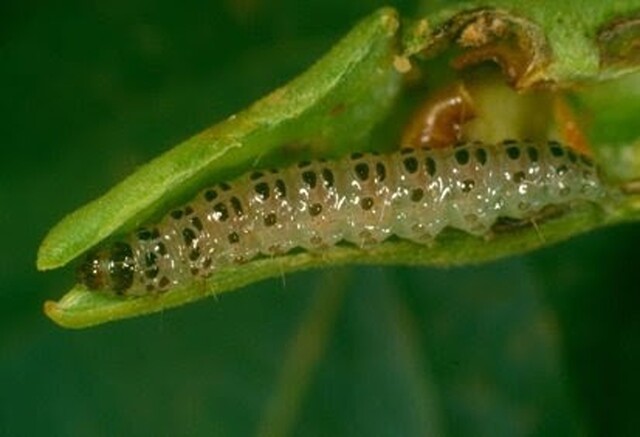

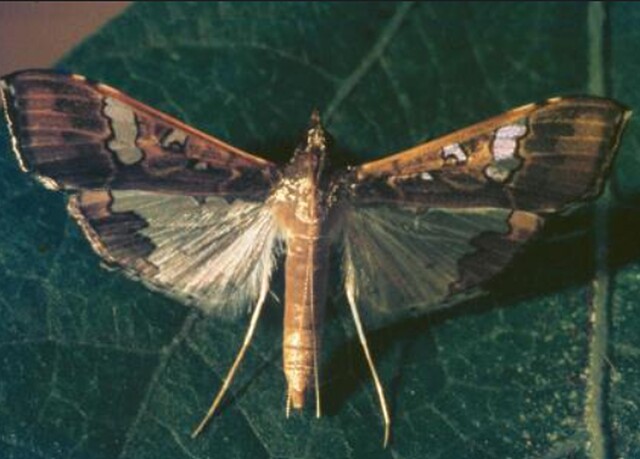
This week is a big wake-up call to our many mungbean growers and agronomists in the Northern Region, with this attached larvae or grub photo.
For many decades, this caterpillar has mostly been a relatively minor pest in several of our bean crops, including mungbeans, pigeon peas, cowpeas, adzuki beans and even our humble navy beans.
In other words, when wanting to control our number one pest, Helicoverpa armigera, the insecticides used for these damaging larvae also controlled any populations of bean pod borer.
Last summer season, they became somewhat harder to control with our range of conventional insecticides and escalated to major pest status.
This was especially the case across the Central Queensland area, however they have since extended down from Callide–Dawson into the South Burnett and onto the Darling Downs.
This insect has been a relatively infrequent pest, yet it can really do some damage in the pods of our bean crops if left uncontrolled.
The life cycle of this lepidopteran pest goes from a rather distinctive brown and white moth with a wingspan of 23mm, to the pale cream eggs she lays on or in the flowers.
The eggs hatch and these white to pale cream larvae, with black dots on their sides and back, feed inside the flowers initially for five to seven days and then move into the pods.
After 10 to 15 days from egg hatch, larvae exit the pods and pupate in the soil.
The pod borer moths are mostly active at night and take refuge in dense legume crops during the day, so having to find eggs or small larvae does take me back to pre-Ingard/Bollgard cotton days of locating and counting the huge egg numbers (over 1000 eggs per female Helicoverpa moth) you can get with this damaging larval stage of insect.
We also have a problem in that our current scouting method, using the humble beat sheet in mungbean crops, will not be good enough, as we may only find around 20 per cent of the actual grub or larvae numbers.
So, detecting pod borer moths as we walk through the crops is a first start, as they fly out of our way, followed by detecting visible webbing of flowers and pods.
Added to that are the groups or piles of frass (waste matter from plant tissue consumed by pod borers) that they leave behind, which is another good indication that you need to have a closer look in your crop for those distinctive entry holes in pods.
Control options are rather limited, however whatever insecticide you choose, you need to be aware that size matters.
In other words, our usually infallible products do have a size criterion attached to successful control before larvae become entrenched in pods.
I could go on about how absolute spray coverage is important, however so is the timing of these sprays, and that is more than what we have had to concern ourselves with in the past for Helicoverpa, mirids or even green vegetable bug control options.
So, to summarise, applying insecticides before pod borer larvae become entrenched in the pods is a very important part of achieving undamaged pods and better returns per hectare.