

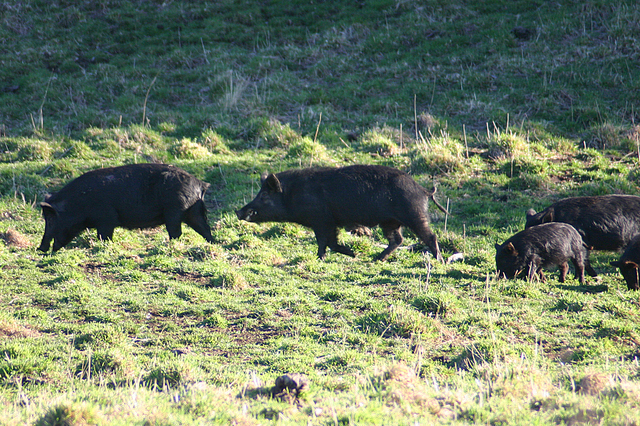
Recently, CANEGROWERS published a new episode of our Shed Talk podcast, exploring the problems growers face from feral pigs.
This is a show where we go on-farm and chat to growers about topical issues that are impacting their business or the industry, so normally the audience is limited to other growers.
However, this particular episode attracted a lot of attention from outside the growing community and judging by some of the comments on social media, many of these people were shocked by the extent of the problem.
As a farmer myself, I was unsurprised to hear that growers in some of the worst affected regions could, on a bad year, lose up to 25 per cent of their crop to feral pig damage.
What did surprise me, however, was the vitriol directed at farmers in some social media comments.
People, often with little understanding of the problem, were quick to blame farmers for the feral pig problem and would condemn them, sometimes in pretty aggressive language, for wanting “taxpayers to foot the bill for a problem farmers created”.
What these commenters seemed not to understand is that pigs came to Australia with the First Fleet and were subsequently transported all over the country by early European settlers.
Inevitably some escaped and reproduced, and feral populations began to grow and spread.
In fact, these feral populations exploded so rapidly that by the mid-1800s there were millions of feral pigs in Australia.
They were officially declared a pest in New South Wales in 1880.
That’s almost 150 years ago.
So, no, farmers as we know them today are certainly not to blame for the feral pig problem.
This, I think, is indicative of a larger problem. People, who often don’t understand the complexity of issues, especially when it comes to our environment, are quick to point the finger at farmers.
As a result, farmers are the ones left to deal with the continuing fallout of what are societal problems.
Feral pigs are a case in point.
Farmers did not create this problem, but we expend substantial amounts of time, money, and effort on baiting, trapping, shooting, and other control methods, often with little success as feral pigs can roam and breed freely in neighbouring national parks and state land where farmers cannot legally control them.
What we need is properly funded, resourced, and managed efforts by the State and Federal governments to control pig populations across the nation.
Not only on private land, but on public land and in our national parks.
After all, it’s not just farmers that suffer. Feral pigs decimate our native flora and fauna, damage our waterways, and even cause erosion and sediment loss that can impact the Great Barrier Reef.
Farmers are often easy targets for difficult problems. But as is the case with feral pigs, these problems are more complex and far reaching than any one group.
To find solutions we need everyone to play their part, even if that is only as a taxpayer, because ultimately this problem will only be solved by significant government intervention.
If you would like to learn more on the problems farmers face from feral pigs, why not check out CANEGROWERS Shed Talk podcast and hear directly from the growers themselves at buzzsprout.com/2206258/15438388