

The beekeeping and irrigation farmer’s nightmare, varroa mite, might be here to stay, according to new reports quoting the Australian Honey Bee Industry Council.
The exotic pest destroys bee hives and is easily spread by bees involved in the industry’s essential work in the horticulture sector, providing the fertilisation service without which farmers cannot produce fruit, nuts, peas, beans and fruit vegetables like cucumbers, pumpkins, zucchinis, tomatoes and capsicums.
It is a situation long predicted by Queensland bee keepers, including Gympie-based industry enthusiast Glenbo Craig, who told Today newspapers more than a year ago that it was probable the Australian industry would have to adapt to the pest if it became endemic.
And that is what is happening as mite infestations spread almost on a daily basis, after being first detected just over a year ago at Newcastle.
Since then eradication efforts have seen the destruction of so many hives that eradication efforts themselves have become a threat.
As reported to Queensland beekeepers at the recent Valley Bees event at the Gympie Showgrounds Pavilion, the situation has become dramatically worse with the spread of the pest In New South Wales from Kempsey to the Victorian border and potentially the near-Sydney area.
ABC Rural has now quoted national beekeeping and horticulture industry representatives saying their members were moving towards advocating management rather than eradication, increasingly seen as unachievable.
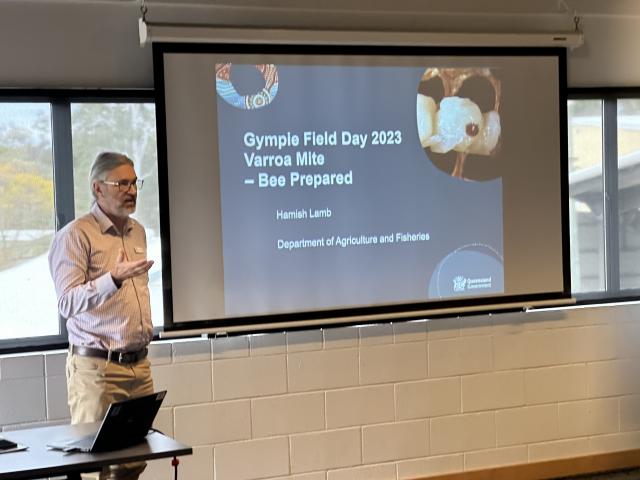
Nambour-based biosecurity officer Hamish Lamb warned of a rapidly worsening situation late last month when he said the situation was worsening daily.
He said the pest had now been detected in the Sunraysia fruit and nut growing region, right on the New South Wales-Victoria border.
This meant the pest epidemic, previously confined to New South Wales, now directly threatened two out of three eastern mainland states.
But the effect on Queensland was nearly as direct because of big traffic in beehives between here and Sunraysia, where bee pollination services are an essential part of the almond industry, as well as the oranges and grapes for which the area is also famous.
These crops do not happen without bees, Mr Lamb warned. Nor do other nuts, fruits and fruit vegetables.
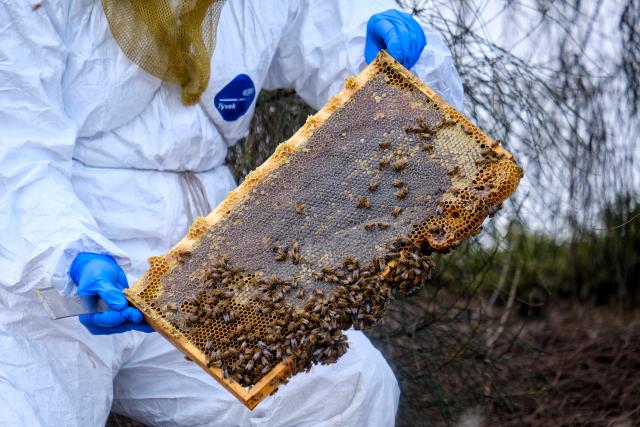
Mr Lamb warned of a need for heightened vigilance and an obligation on bee keepers to check their hives for infestation.
The rapid daily spread had “complicated things” because of the involvement of Queensland beekeepers in providing pollination services, with hives going and out of affected areas regularly.
Mr Lamb said affected areas were subject to 10km eradication zones, in which all bees have to be destroyed, and a 25km zone where bee hives need to be closely watched and tested for the mite.
Queensland had about 10,000 registered bee keepers, with about 160,000 hives, all now subject to a new Biosecurity Act, with a new approach that includes “a general biosecurity obligation on beekeepers,” now requiring them to monitor risks and to take extra precautions, including testing hives for mites if returning from any areas thought to be problematic.